"Into the Dust": the score is the first, and the box office is the bottom. We need each other with such movies.
Text | AnnaKarina
Edit | AnnaKarina
Recently, the film market has gradually picked up. Let’s look at two pictures first.
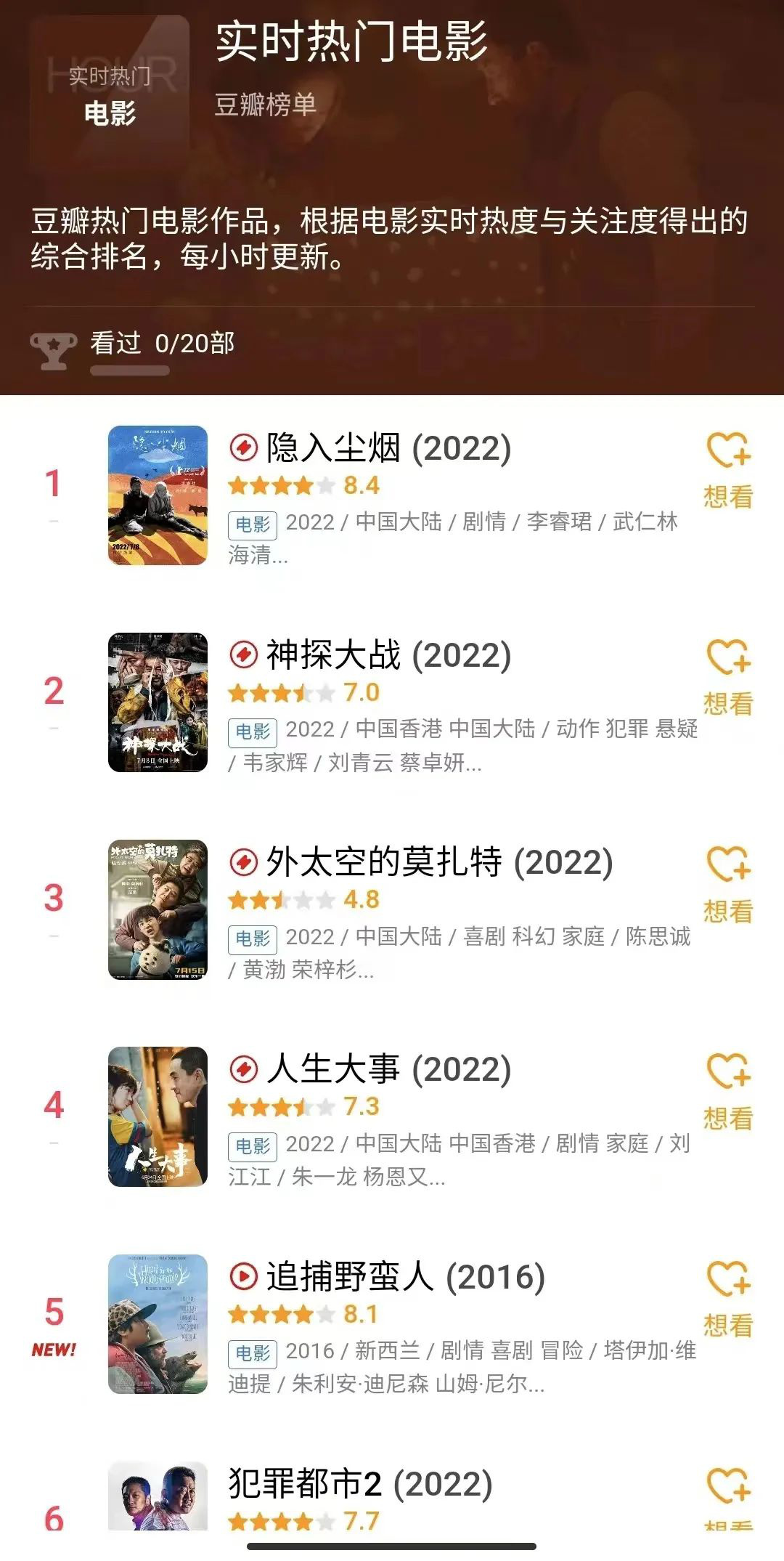
figure 1
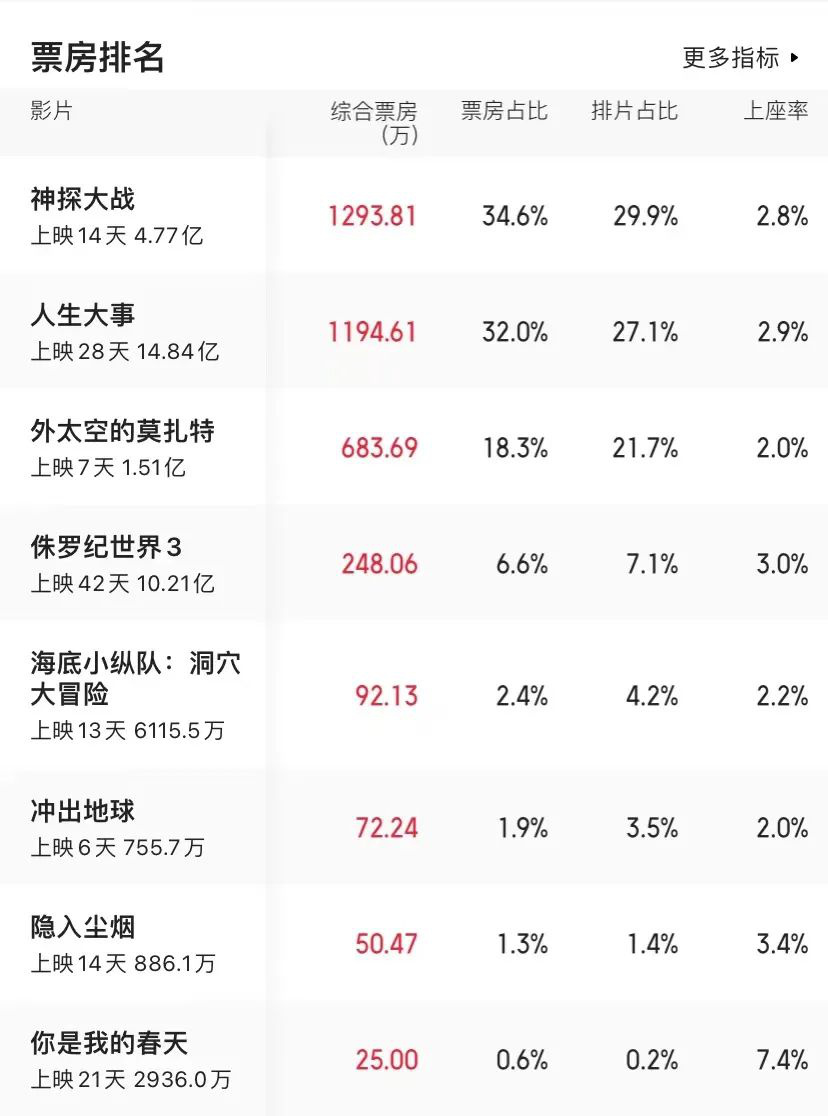
Figure 2
Figure 1 is the ranking list of Douban’s recent popular movies; Figure 2 is the box office list of recently released movies. (Both screenshots are taken at 19: 00 on July 21st.)
Comparing the two pictures, we can find a paradox. Douban’s first-ranked "Hidden into the Dust" was released for 14 days, and the box office was only over 8 million, which was the bottom.
In fact, as an art, our film market provides very limited choices for the audience. Even if Christina, a well-known actress, is used in "Into the Dust", and even if she tries her best to market and search frequently during the film release, this film with only 1.4% of the authors will still become an unpopular masterpiece that many ordinary audiences want to see but can’t see.
It is true that in the minds of many viewers, watching movies as an entertainment activity has only the most basic demands, that is, visual stimulation and emotional resonance, while movies by authors with more artistic expression are actually more personal and have a certain threshold for watching movies.
As can be seen from the domestic box office, the highest box office of art films at present is The Party at South Station directed by Yinan Diao, which has won 202 million box office, while the other films have not exceeded 100 million box office. Even the highest box office scores of works by famous directors such as Jia Zhangke and Lou Ye have stopped at more than 60 million. And all this can only get the attention under the celebrity effect of directors and actors and the blessing of film festival authority.
Relatively speaking, Ruijun Li, the director of "Into the Dust", is a young director born in 1980s. Since 2007, he has made six feature films written and directed by himself. Although he has made a breakthrough in the three major international film festivals in Europe, he has been selected as the main competition unit of this year’s Berlin International Film Festival with "Into the Dust", which is the third time that he has been selected as the host of the three major international film festivals after "Lanxin Grand Theatre" directed by Lou Ye in 2019.
01
Love exists.
Ruijun Li’s films have always been based on his hometown of Gansu, and most of his characters are old people, children and animals they live on in the countryside. The fate of marginal areas and marginal figures abandoned by modernization is his creative motif throughout.
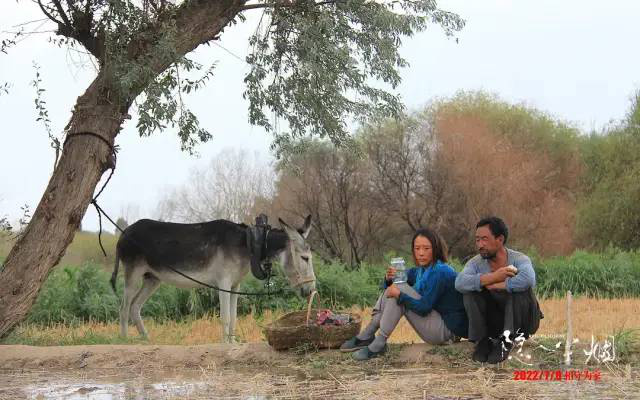
"Into the Dust" tells a touching love story, and the core wrapped in this type is still the loss of voice and helplessness of traditional agriculture and simple farmers in the process of modernization.
The two protagonists in the film, Ma Youtie and Cao Guiying, are "abandoned children" in the family. Ma Youtie worked for his third brother all his life, only accompanied by an old donkey, and his name was not even remembered in the village. Everyone only knew that there was a bachelor named Ma Laosi. Cao Guiying, who was imprisoned in a shack by her elder sister-in-law because of her physical disability, does this role remind us of some jaw-dropping news?
Fortunately, the two met, and when no one wanted them, they got married.
Old four will buy a coat for Guiying because of her urinary incontinence to avoid the ridicule of the villagers; Guiying will change the hot water in the water bottle again and again in the cold winter night, cover the water bottle in the clothes on her chest, and look at the way home of Lao Si with a flashlight; Two people working in the fields, the old four pulling the donkey in front, Guiying sitting on the plow rake, curled up into a child.
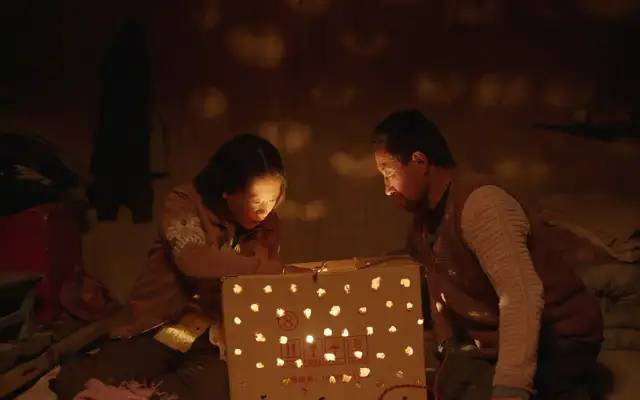
In the season of sowing seeds, Guiying leveled the sown land with her feet in front, and Old Four sowed seeds in the back, saying, "Look, is it like planting your footprints in the soil?" In autumn, when the wheat was harvested, Old Four put a few grains of wheat on Guiying’s back to print a small flower for her. Chickens were put into perforated cartons, and the light of light bulbs came out, like flickering starlight, just like the little warm and tiny hope between them.
It rained heavily in summer, and they rescued the adobe at night. When they slipped, they all fell to the ground, but they couldn’t get up. Guiying was crying and laughing, and Old Four didn’t forget to put a plastic film on her for fear that she would catch a cold. Guiying had a wheat rash, and Lao Si helped her rub her back in the river. The two slept on the roof, and the old four tied Guiying and his waistband with a rope, laughing at himself that everyone in the village said that he wanted to tie Guiying to his waistband.
They don’t have their own house, and they live in uninhabited earthen houses all the year round. When the demolition policy came, the owners of the houses returned to their hometowns to cooperate with the demolition and get subsidies. They moved three times and nailed their wedding words to the wall three times. Through hard work, they finally built their own house and lived in their own home. Guiying said that she thought she would never have her own home in this life.
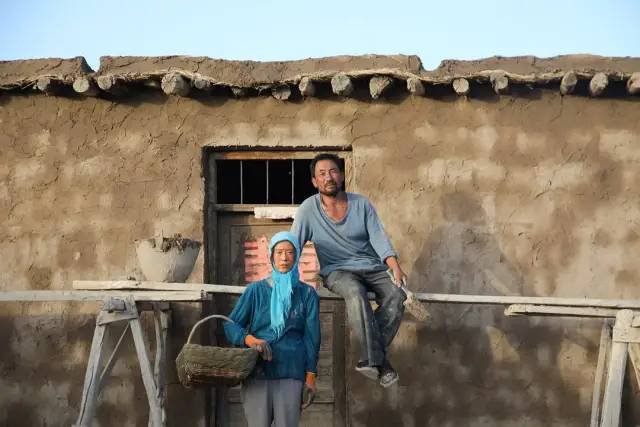
There are still too many details that can be remembered between the two people. In the cinema with only a few people, it is almost inevitable to hear sobbing all the time. The author observes that both men and women are deeply moved, so even if they are two people so far away from our lives, our empathy with them is 100%. More importantly, this is not sympathy won by deliberately piling up sadness. What really touches us is their kindness and simplicity, and all the excellent qualities as a person that people have long forgotten after being trapped by urbanization. And we regain our faith in love from two people who have no aesthetic feeling or even broken appearance.
02
Farmers can’t leave the land
"The wind blows, wheat can say what? What can wheat say when it is pecked by flying sparrows? What can wheat say if it is bitten by its own donkey? What can the wheat say when it is cut off by the summer sickle? "This is a madman in the film Lao Si and Gui Ying’s mouth, which is like a folk song and a fable.
The fate of Laosi and Guiying is like wheat, drifting in the wind of the times, making a living under the sickle of society, and maintaining self-integrity in human pecking.
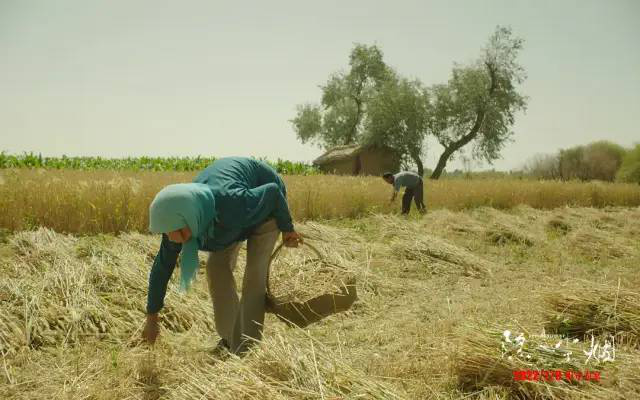
In the film, Laosi is like a saint, and his high morality is reminiscent of lazaro in Happy lazaro.
Old four has rare panda blood, and the land contractor in the village is seriously ill and needs this blood to save his life, so old four donates blood for free again and again regardless of Guiying’s opposition. The contractor’s son claimed that he didn’t have the money to pay the villagers’ rent, so he could only repay it with food at a low price. When the fourth son received the food, he deducted the coat that the contractor’s son paid for Guiying, because he said it was borrowed and yard by yard.
In desperation, Old Four sold all his possessions and grain, paid off the credit in the shop, returned ten eggs borrowed from his neighbors, and promised two bags of potatoes to the villagers. Finally, he untied the rope on the donkey and cursed it for being bossed around all his life, but he didn’t know how to walk after being released. This is scolding the donkey and alluding to yourself.
When Laosi and Guiying moved, the swallows under the eaves could not fly. Before the bulldozer came, Laosi jumped up and let the swallows fly away quickly. When the house turned into a pile of loess, he picked up the swallows’ nest and put it under the eaves of his new home. Old four and Guiying got a new building because of the number of poor households. In fact, the third brother is planning for his son. Old four is worried about what to do with chickens, pigs and donkeys. He said that farmers can’t leave the land, and food grows from the land, which is not dirty at all.
Guiying is reminiscent of the poet Yu Xiuhua, who is also disabled. Fortunately, Yu Xiuhua has words as a weapon and comfort, and Guiying is fortunate to meet her fourth child. Guiying has a fourth child to protect her from urinary incontinence, but in reality, even Yu Xiuhua, a celebrity, will still be exposed by the "lover" live broadcast that she wets the bed. She can only clarify on social media that she has not peed on the bed with a crying expression.
In reality, how many people at the bottom are being hurt but losing their voices. They are pure and kind all their lives, and they also have their own philosophy of life, like tough weeds in the wind, which cannot be easily broken and have no resistance.
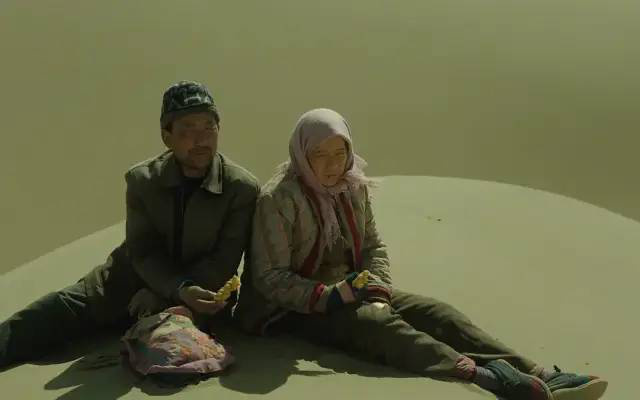
Director Ruijun Li said in a post-screening exchange: "Gui Ying and Lao Si are strangers to more people in their lives. Even after half his life, many people don’t know who Ma Youtie is. They are two people who rarely get the attention of others. I hope that through a movie, these similar people can harvest everyone’s eyes and get a collective attention. "
Ruijun Li really aimed the camera at the characters this time, and did not hesitate to give them close-ups. At the same time, sowing, sprouting and harvesting, in the continuous work of Laosi and Guiying on the land, we have seen the four seasons’ circulation and the long-lost and primitive process of grain birth. In the green cornfields and golden wheat fields, Laosi’s red vest and Guiying’s Kong Quelan headscarf appear and disappear. Ruijun Li abandoned many surreal image expressions in his previous works and combined them with all the rough and wild life forces.
03
We need each other with such movies.
Based on the content of the story, the actors in Ruijun Li’s films are basically amateurs, except for the last film Passing by the Future, starring Yang Zishan and YIN FANG, and Christina, who plays Guiying this time.
For Christina, she has made a lot of efforts in the role of Guiying, which is a major breakthrough in her career as an actress. Wu Renlin, the actor played by Ma Youtie, is Ruijun Li’s uncle, a real farmer, who has also appeared in the director’s previous films. When the amateur actor adapts to the camera, those uncut real life details are extracted, which can really touch people’s hearts.
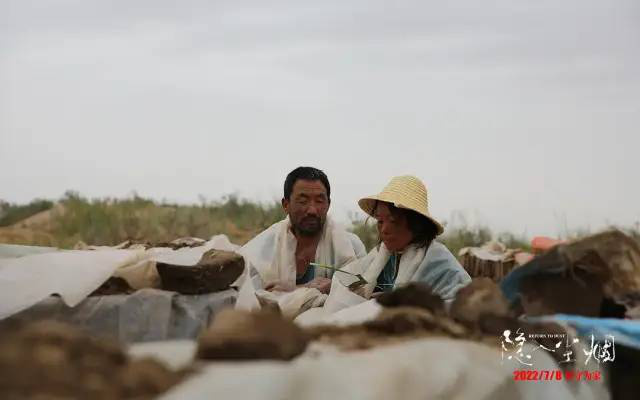
At present, more and more art films use famous actors, which is understandable for market reasons, but as mentioned above, even so, the market position of art films is still embarrassing.
The real bottom is too far away from the urban life of the public. Even though the tragic experiences of these characters are often "promoted" by everyone on the Internet, it is contrary to the psychology of ordinary audiences to relax and entertain in movies to spend money and time watching and gazing at their fate under long shots.
Ruijun Li once mentioned in an interview in the film "Home is in a Place with Rich Water and Grass" (2014), "I have never turned down an ordinary audience, it’s just that the audience thinks that I turned him down … It’s like when a place is full of Sichuan food, I suddenly open a Cantonese restaurant, and the local people may think that I am turning him down. No, I’m just enriching their tastes. I hope the audience will have more choices. "
Similarly, in this year’s interview with "Into the Dust", he once again said: "A movie market, it should be normal that all kinds of movies are talented. The most important thing for the health of a market is diversity. For example, if we enter a supermarket, what is a supermarket? Supermarket is a variety of items, which can be selected by different audiences. Instant noodles, one piece, five pieces, even if you have money, you can buy ten pieces. But if this supermarket only sells one kind of instant noodles, this is a specialty store, not a supermarket, then it is not a market, and that market actually shrinks and dies. "
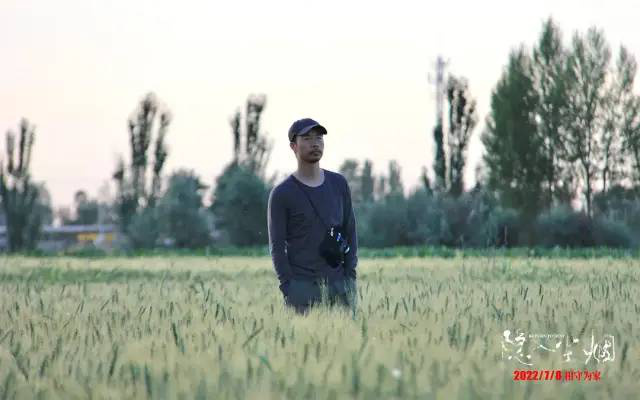
Director Ruijun Li.
So a film like "Into the Dust" really needs a ticket in our hands. More importantly, we need such creations, whether it is the audio-visual exploration of movies, the author’s perspective in narration, or the attention to the bottom characters in stories. They are not just functional existence to promote market diversification.
–