"Waste-free City" Tour (63) The mode of "classified collection and reduction+separate collection and utilization+total incineration disposal" of domestic waste in Shenzhen
editorial comment/note
In order to implement the requirements of the Notice of the General Office of the State Council on Printing and Distributing the Pilot Work Plan for the Construction of "Waste-free Cities" (Guo Ban Fa [2018] No.128), the Ministry of Ecology and Environment organized all provinces (autonomous regions and municipalities) to recommend candidate cities for "waste-free cities", and jointly with relevant departments, screened and determined the "11+5" pilot cities and regions. We are now exchanging working experiences and exploring working modes on how to promote the reduction of solid waste source, resource utilization and harmless treatment, promote the transformation of urban green development and improve the quality of urban ecological environment in the process of promoting the construction of "waste-free city".
Basic situation
In order to solve the problem of garbage classification, Shenzhen adheres to the dual-track strategy of combining socialization and specialization, clearly takes the strategic thinking of "full reduction at the source, separate classification at the front end and comprehensive utilization at the end", and actively completes the "two articles" (calculating the reduction account and the participation account) by focusing on building the "four systems" of garbage classification (separate classification system, publicity and supervision system, responsibility implementation system and technical standard specification system) to promote domestic garbage from the source.
At present, Shenzhen’s domestic waste output is 32,292 tons/day, the city’s domestic waste separation and recycling amount reaches 9,636 tons/day, the other waste amount reaches 15,356 tons/day, the market-oriented renewable resources amount reaches 7,300 tons/day, and the domestic waste recycling rate is 41%, ranking among the best in the waste classification assessment of 46 key cities organized by the Ministry of Housing and Urban-Rural Development. Five domestic waste energy ecological parks have been built in the city, with the incineration capacity of 18,000 tons/day and the actual treatment capacity of 20,000 tons/day, basically realizing the total incineration and zero landfill of primary waste.
Main practice
(1) Take multiple measures to promote the source output of domestic waste and guide citizens to practice a green lifestyle.
Shenzhen has accelerated the construction of a green action system, widely promoted the concept of green, simple, moderate, green, low-carbon, civilized and healthy life, and formed a social atmosphere advocating green. We will extensively carry out initiatives to create "waste-free urban cells" such as green institutions, green schools, green hotels, green shopping malls and green families, and compile and issue five standards and five evaluation rules to provide a clear evaluation index system for the creation of various "waste-free urban cells". Shenzhen is the first in China to launch an ecological and civilized carbon coin service platform. Registered users can receive carbon coin rewards for their green and low-carbon behaviors such as sorting domestic garbage and recycling waste plastics, as well as participating in voluntary supervision activities of garbage sorting and knowledge contest of "waste-free city". Carbon coins can be exchanged for electronic coupons such as living, sports, cultural goods, sports venues and mobile phone bills, which positively guides and encourages the public to actively participate in the construction of "waste-free city".
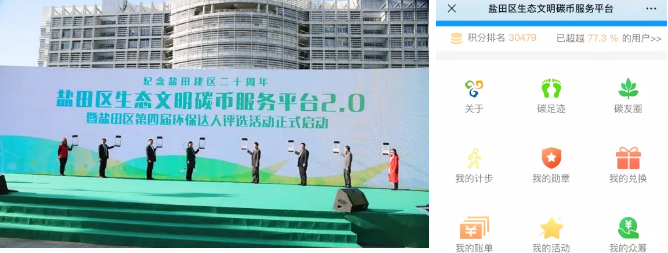
Figure 1 Shenzhen Ecological Civilization Carbon Coin Service Platform
Carry out the action of plastic pollution control and upgrading, print and distribute the Implementation Plan of Shenzhen Municipality on Further Strengthening Plastic Pollution Control, strictly limit the approval of prohibited plastic industry projects, conduct a survey on the production capacity of eliminated plastic products manufacturers, comprehensively promote industrial transformation and upgrading, technological transformation, and eliminate backward low-end plastic manufacturers. Set up special funds for circular economy, energy conservation and emission reduction, and support degradable plastic enterprises to apply for green manufacturing system. Hold the "2020 Shenzhen Technical Forum on Biodegradable Plastics as Plastic Substitutes" to promote enterprises to explore the market potential of degradable plastics. We will ban or restrict the sale and use of plastic products in shopping malls, supermarkets, bazaars, catering industries and other key areas by initiating activities and holding the on-site promotion meeting of plastic shopping bag substitutes in 2020. Hold a summit forum on the construction of a "plastic-free city" to explore and promote the comprehensive management of the whole industrial chain of plastic reduction, substitution, recycling, recycling and disposal from the perspectives of policy, technology, industry and public awareness.
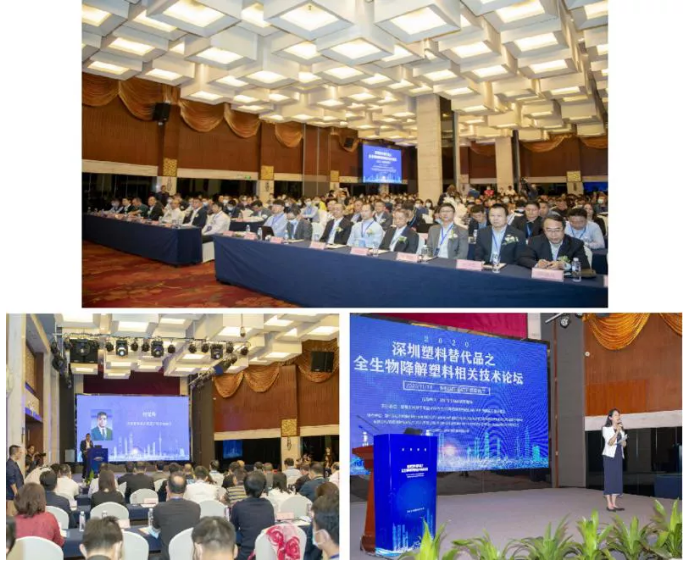
Fig. 2 Shenzhen 2020 Biodegradable Plastics-related Technology Forum.
Accelerate the green packaging and recycling of express delivery in the same city. Issue the management guide of green packaging and the operation guide of recycling packaging for express delivery in the same city, and provide standards and specifications for the reduction, greening and recycling of express delivery packaging in Shenzhen. Research and development of Feng BOX recycling packaging box, "Express Bao" shared packaging box, qingliu box, recycling transfer bag, vigorously promote the use of electronic waybills, and establish a courier packaging recycling service network. Through local TV stations, newspapers and other multimedia to promote green express delivery, a number of express delivery companies launched the "Green Express" initiative to enhance public awareness.
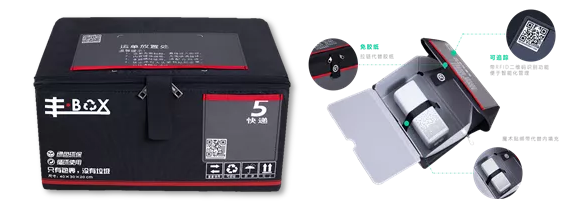
Fig. 3 Feng Box Cyclic Packing Box
The whole people advocate "CD Action" and advocate a good atmosphere of thrift and civilized dining. More than 300,000 posters and proposals were produced, and the "CD Action" video series was broadcast in more than 5,000 restaurants in the city, forming a publicity effect. All star-rated hotels set up "CD Action" signs to call for proper ordering, create "Waste Reduction Day" on November 8, and carry out large-scale public welfare activities such as "CD Action Rejects Waste on the Tip of the Tongue" and "CD Action is Happy Every Day".
(2) Establish a publicity and supervision system for waste sorting, and improve the efficiency of source sorting.
Shenzhen has firmly established the concept of "garbage sorting is urban civilization", focused on behavior guidance, intensified publicity and planning, consolidated school basic education, innovated public education, and made every effort to build a publicity and supervision system linked with urban areas, thus creating a good atmosphere for social participation. The education guidance of citizens has always been placed in a prominent position, and a publicity and supervision system covering public education, social propaganda, school education, family guidance and on-site supervision has been initially established.
Publicity and guidance: produce and publish a series of public service advertisements for waste classification, hire social celebrities as "promotion ambassadors" for waste classification, set up the first national alliance of public service organizations for waste classification, and promote the joint efforts of all sectors of society to expand social influence. Invite social celebrities as ambassadors of waste classification to improve the awareness of domestic waste classification. Invite social celebrities such as Wang Shi, Lang Lang, Yi Jianlian and BiBi Zhou as spokesmen for Shenzhen waste sorting, and increase public welfare publicity. Printed posters of Wang Shi, Lang Lang and others for Shenzhen domestic waste classification in bus bodies, cars and billboards on both sides of the subway.
Public education: Innovative implementation of the Dandelion Program, the formation of nearly 100 volunteer lecturers, the establishment of municipal science education bases and district-level experience halls, and the launching of thousands of "lecture halls on garbage classification" and "micro-classes on garbage classification" to realize the scale and normalization of public education. We implemented the dandelion public education plan, built 17 garbage sorting science education halls, set up more than 830 volunteer lecturers, and carried out more than 11,000 garbage sorting lecture halls and micro-classes. The country pioneered the appointment management platform of three programs: "volunteer supervision, popular science education museum and volunteer lecturer" to improve the participation of citizens.
School education: Joint education departments promote the practice of school waste classification education, compile waste classification knowledge books for middle schools, primary schools and kindergartens, incorporate waste classification into school moral education courses, and organize students to carry out waste classification education practice. Carry out a variety of activities such as knowledge contests and creative competitions that turn waste into treasure.
Social Collaboration: Invite people from all walks of life and cartoon character "Xiong Er Xiong Da" as promotion ambassadors. Set up a volunteer service team, form a public service alliance, and join hands with "Beautiful Shenzhen" volunteers to promote garbage sorting; Establish a working mechanism for normal contact between NPC deputies and CPPCC members.
On-site supervision: establish a garbage classification model of "centralized classified delivery+regular fixed-point supervision" in residential areas. Beginning in 2018, we will set up centralized classification drop-off points in residential areas, vigorously implement the removal of barrels from residential floors, organize and mobilize cadres, volunteers, enthusiastic residents and property management personnel in party member to conduct on-site supervision at 7-9 pm every night, and guide residents to participate in classification and correct classification.
The most stringent administrative punishment measures for domestic waste were introduced in China. Individuals who violate the regulations on classified domestic waste will be punished with the highest penalty of 200 yuan, and units who violate the regulations on classified domestic waste will be punished with the highest penalty of 500,000 yuan. The measures of "replacing punishment with work" have been introduced, and individuals who violate the rules can be deducted from fines by participating in activities such as garbage sorting training and garbage sorting supervision at regular intervals in residential areas. Introduce incentive measures for domestic waste classification, and select "green units for domestic waste classification", "green communities for domestic waste classification", "good families for domestic waste classification" and "active individuals for domestic waste classification" by giving priority to notification and praise, supplemented by financial subsidies.
(C) the establishment of a classified governance system to enhance recycling capacity.
In strict accordance with the requirements of "classified delivery, classified collection, classified transportation and classified treatment", Shenzhen strives to promote the classified treatment of domestic waste in the whole process. In the front-end classification, following the national standards, based on the four categories of "recyclables, kitchen waste, harmful waste and other wastes", and according to the specific promotion strategy of "big diversion and fine classification", the kitchen waste, fruit and vegetable waste and greening waste with large production volume and relatively concentrated are divided; The household kitchen waste, plastic paper, waste furniture, waste fabrics, annual oranges and harmful waste produced by residents are classified in detail. In the collection and transportation treatment, different kinds of garbage are entrusted to different collection and transportation treatment enterprises, so that special vehicles can be used for special transportation and separate treatment to prevent the phenomenon of "front-end separation and end-mixing". The way of garbage collection, transportation and treatment in Shenzhen is shown in the following figure.
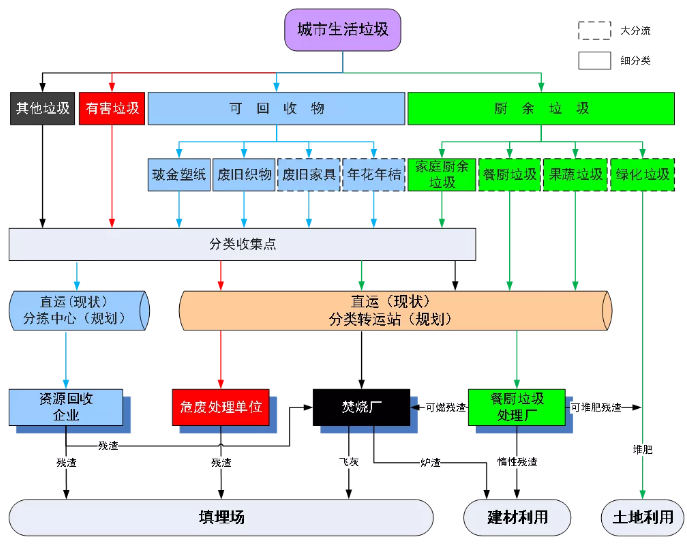
Figure 4 Classification, collection, transportation and treatment of garbage in Shenzhen
(D) the construction of bottom disposal facilities to achieve zero landfill.
Five energy ecological parks, namely Bao ‘an, Longgang, Nanshan, Pinghu and Yantian, have been built and put into operation, with the incineration capacity of domestic garbage reaching 18,000-20,000 tons/day, and the primary domestic garbage has been completely incinerated and landfilled, with 100% harmless disposal of domestic garbage. The world’s most stringent pollution control standards for domestic waste incineration and the emission limits of major pollutants have been issued, which is superior to the EU standards. The domestic waste incineration power plant shall be de-industrialized, and the landscape function shall be designed according to the appearance of star-rated hotels. The domestic waste incinerator and flue gas purification system shall adopt the most advanced technology and equipment at present. Innovate the community co-construction mode of domestic waste incineration power generation project, give 57 yuan/ton ecological compensation to the community where the project is located according to the amount of incineration disposal, provide low-cost energy for the community with cogeneration, invest in the construction of hiking trails, swimming pools and popular science exhibition halls to give back to the community residents, promote the harmonious coexistence between enterprises and community residents, and effectively solve the problem of neighborhood avoidance. The economic compensation system for the cross-regional disposal of domestic waste will be introduced. If the waste-producing administrative region entrusts other administrative regions to jointly dispose of domestic waste, it is necessary to pay a high disposal fee to the disposal administrative region as the ecological compensation fee for the disposal administrative region.
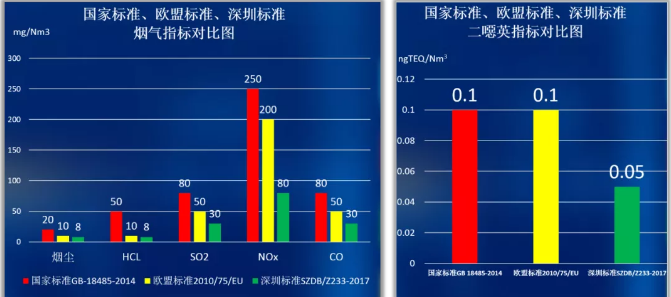
Fig. 5 Exhaust standard of Operation Specification for Domestic Waste Treatment Facilities in Shenzhen (SZDB/Z 233-2017)
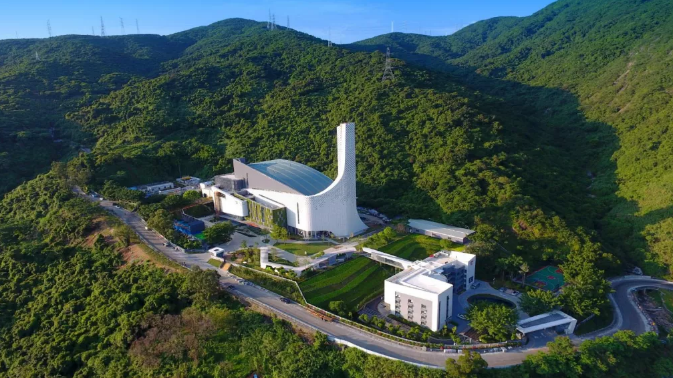
Figure 6 Yantian Energy Ecological Park
(5) Establish a whole-process supervision system.
Establish and improve the "full coverage, whole process and hierarchical" supervision system for domestic garbage removal and disposal, and comprehensively strengthen the supervision of garbage removal and disposal. First, clarify the division of responsibilities of urban management departments of cities and districts, implement supervision responsibilities at different levels, and set up a garbage disposal supervision center at the municipal level to guide and urge all districts to strengthen supervision; The urban management departments of all districts carry out daily supervision work, and adopt the methods of dispatching supervision teams and entrusting third-party professional institutions to ensure that all sanitation facilities are managed. The second is to build a smart urban management platform, and use technologies such as the Internet of Things and big data to supervise the whole process of garbage generation, transshipment and disposal, and deal with problems in time when they are found, so as to ensure that the domestic garbage removal and disposal work is standardized and orderly.
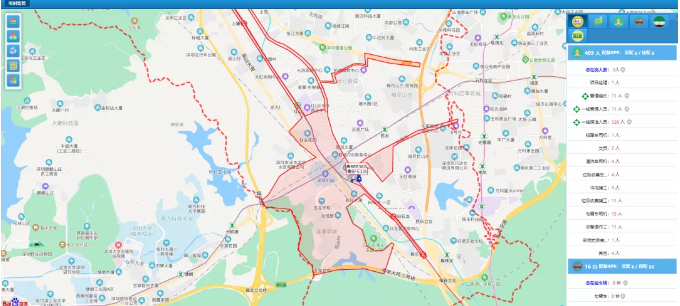
Figure 7 Smart Urban Management Platform
Achieved results
At present, the mode of "centralized classified delivery+regular fixed-point supervision" of domestic waste has been promoted in all 3,815 communities and 1,690 villages in the city, with a total of 20,499 supervisors regularly conducting on-site supervision, and the participation rate of residents has been continuously improved. The separated and classified recovery volume of domestic garbage reached 9636 tons/day, and the market-oriented renewable resources recovered 7300 tons/day, and the recovery rate reached 41%, reaching the international advanced level.
The city is equipped with 3,641 classified collection and transportation vehicles, and 122 classified processing facilities and equipment have been built. The classified garbage disposal methods and capacities are as follows:
Green garbage. After being collected and crushed, it can be fertilized or transported to a biomass power plant for power generation, and the larger trunk can be directly recycled after the branches and leaves are removed, with an average daily collection and transportation capacity of 1307 tons.
Kitchen waste. Among them, the kitchen waste is recycled by eight franchise enterprises in the city, and four centralized treatment facilities have been built, mainly using anaerobic fermentation process to produce biogas to generate electricity. Household kitchen waste is treated in cooperation with kitchen waste or through decentralized small-scale treatment facilities. There are 64 kitchen waste (kitchen waste, household kitchen waste, fruit and vegetable waste) treatment facilities in the city. The average daily collection and transportation capacity of kitchen waste is 6268 tons.
Waste furniture. Take the lead in carrying out special collection and transportation treatment in the country, establish an appointment recycling system, and implement fixed-point delivery and appointment removal. Sixteen dismantling facilities were built in the city, with an average daily handling capacity of 1,148 tons, and the recycling rate reached 85%.
Waste fabric. Professional enterprises were introduced, and 6,706 recycling boxes were set up in the whole city, which were made into recycled packaging materials and other products after recycling, with an average daily handling capacity of 24 tons.
Years of flowers and oranges. Organize recycling after the Spring Festival every year. In 2020, the city will recycle 1.98 million pots, 1.3 million flowerpots, 2.53 million brackets and 12,000 transplanted plants.
Harmful waste. Mainly batteries, lamps and household chemicals, residents entrust professional companies to carry out harmless treatment after classified release, with an average daily collection and transportation capacity of 0.6 tons.
Recyclable material. Mainly glass, gold, plastic and paper. Residents are recycled by market-oriented recycling enterprises after being classified and put into use in the community, with an average daily collection and transportation capacity of 10,667 tons (glass, gold, plastic and paper recycling+market-oriented renewable resources). Shenzhen has made great efforts to promote the "two-network integration" between the domestic waste sorting system and the recycling system of renewable resources, and comprehensively strengthened the docking in the links of collection, transshipment, sorting and treatment, so as to promote the deep recycling of recyclable materials.
Popularization and application conditions
The mode of "classified collection and reduction+separated collection and transportation utilization+total incineration disposal" of domestic waste in Shenzhen promotes the reduction of waste source by advocating the concept of green living, promotes the classified collection and transportation treatment of domestic waste by "large separation and fine classification", and carries out harmless treatment of other wastes left after classification by high-standard incineration facilities. This mode has certain requirements for citizens’ quality, urban economic strength and management level, and is suitable for large and medium-sized enterprises with relatively developed economy, shortage of land resources and perfect urban governance system.
Shenzhen has made use of the urban accumulation of "volunteer city" to carry out the dandelion public education plan, trained a large number of volunteer teachers of domestic waste classification, established a series of popular science education bases for domestic waste classification, incorporated domestic waste classification into the school moral education system by compiling waste classification education books and offering special courses, and realized the concept of waste classification by "one student drives a family and influences a group", which laid a good public foundation for improving the participation in waste classification.