The old-fashioned famous enterprise Digital Source Technology has fallen and made a living by building affordable housing.
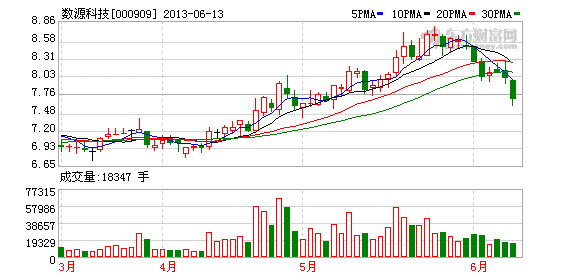
Zero growth in market value after 14 years of listing, the secretary-general has no idea about the basic business.
Among the 244 A-share listed companies in Zhejiang, nothing is more tangled than Digital Source Technology Co., Ltd. (00090, hereinafter referred to as "Digital Source Technology").
This company in the name of "science and technology" has been a high-tech enterprise in Zhejiang Province since its listing, enjoying 15% income tax concessions. The company is not without high-tech products. The digital source brand set-top box it produces is the largest purchasing brand of China Digital Media (000156), a listed company in the same city. In 2012, China Digital Media purchased 69.73 million yuan of digital source technology, accounting for 9.23%.
However, in the stock trading software, Digital Source Technology has been classified as "real estate industry". Because the real estate business (including the construction of a large number of affordable housing) has already constituted the main profit source of this "high-tech enterprise".
In 2012, the profit of Digital Source Technology’s real estate business reached 57.70%, while its real main business, audio and video products, accounted for only 21.92%.
When it was listed in 1999, the leading product of Digital Source Technology, "Xihu Brand" color TV, was famous in China, especially in Zhejiang. However, times have changed, and Digital Source Technology has long since faded out of public view and become a declining brand that almost no one has mentioned.
After 14 years of listing, Digital Source Technology has almost stagnated, and there is no refinancing behavior such as an additional issuance. The share capital has remained in the state of listing for 14 consecutive years; The company has not paid dividends for 11 consecutive years, and only paid dividends twice in 2001 and 2012, with a dividend amount of only 39 million yuan.
What is even more ironic is that this high-tech listed company, which works in the best location in Hangzhou, uses computers with huge CRT monitors, and the company is in a gloomy atmosphere. The secretary-general of the company, who has served for more than ten years, even has no idea about many businesses of the company.
The next year after listing, it lost money for 11 years without dividends.
The controlling shareholder of Digital Source Technology is Xihu Electronics Group Co., Ltd. (hereinafter referred to as "Xihu Electronics"), which currently holds 53.23% of the shares. Xihu Electronics was established in September 1995 (formerly known as Hangzhou Dongfeng TV Factory was founded in 1973). It is a comprehensive enterprise group controlled by Hangzhou Municipal Government, which integrates many industries such as industry, microelectronics, commerce, economy and trade, transportation and real estate development. It is a leading enterprise in the electronics industry in Zhejiang and Hangzhou, and one of the 520 large state-owned enterprises in China. Today, Digital Source Technology and West Lake Electronics are both working in No.1 Jiaogong Road, Hangzhou, which is the top location in Hangzhou and is located in the core of Hangzhou Huanglong Business Circle. West Lake Electronics covers an area of 290,000 square meters, and its land assets alone are several billion yuan.
In July, 1998, Xihu Electronics, as the exclusive sponsor, discounted its assessed operating net assets of three wholly-owned subsidiaries, namely Hangzhou Xihu Electronic Industry Co., Ltd., Hangzhou Xisha Electric Appliance Corporation and Xihu Electronic Group Injection Mould Co., Ltd., and established Digital Source Technology by way of fundraising.
In May 1999, Digital Source Technology went public with 60 million shares at an issue price of 5.18 yuan. Its P/E ratio is 17 times, the lowest in Shanghai and Shenzhen stock markets in 1999.
According to the Prospectus of Digital Source Technology, the digital processing color TV set developed by the company is in a leading position in China, reaching the advanced level of international similar products in the mid-1990s. The company’s main digital technology electronic products belong to the latest technical trend in the world, with "very broad prospects".
At that time, the main products of Digital Source Technology were Xihu brand color TV sets, with sales accounting for more than 90% in 1996-1998. Xihu brand color TV was once one of the famous color TV brands in China. It won the first prize in all previous evaluations in 1980s and 1990s, and won the titles of National Silver Award, National Customer Satisfaction Product and Top Ten Best-selling Color TV in China Market in 1995. After the listing of Digital Source Technology, it was once popular in the market. In February 2000, its share price reached as high as 26.9 yuan, more than five times its issue price.
The scenery of digital source technology is only a flash in the pan.
Ironically, Digital Source Technology, a high-tech brand, has just been listed, and the situation of domestic color TV industry has turned sharply, becoming a traditional industry and even a sunset industry. After years of "price reduction war" for domestic color TV sets, by 2000, the color TV industry with excess capacity suffered losses in the whole industry. According to statistics, the profit rate of the whole industry in 2000 was only 2%, and the total profit was only 540 million yuan.
In this context, in the first half of 2000, Digital Source Technology suffered a huge loss of 16.72 million yuan, while the after-tax profit before listing in 1998 reached 50.45 million yuan. The retail price of some color TV sets of the company is lower than the cost price, and even several models are lower than the material price.
After listing in 1999, the total share capital of Digital Source Technology was 196 million shares. This capital structure has been maintained for 14 years, and the market value of the company has not increased at the time of listing. The company has not paid dividends for 11 consecutive years, and only paid dividends twice in 2001 and 2012, with a dividend amount of only 39 million yuan.
In April this year, Digital Source Technology released the plan of converting 10 shares of common reserve fund into share capital. By June 18th, the total share capital of the company will be changed for the first time, reaching 294 million shares.
In the past, famous scientific and technological enterprises became developers of affordable housing
According to media reports, in November 2000, West Lake Electronics, which suffered serious losses, ranked second among the 520 key supporting enterprises in China, and faced the fate of being merged or bankrupt.
Digital source technology is also struggling on the edge of loss. From 2000 to 2007, the company’s net profit has been less than 5 million yuan, and in 2008 it suffered a huge loss of 18.59 million yuan.
Since 2009, the performance of Digital Source Technology began to pick up, with a net profit of 20,261,400 yuan. Since then, the annual net profit has remained above this base.
However, this is basically thanks to Hangzhou Zhongxing Real Estate Development Co., Ltd., a wholly-owned subsidiary of Digital Source Technology. In 2012, ZTE Real Estate contributed a profit of 54,963,300 yuan. The profit accounted for 57.70% and the gross profit was 30.13%.
Hangzhou Zhongxing Real Estate Development Co., Ltd. was jointly invested and established by Digital Source Technology, Hangzhou Yihe Network Co., Ltd. and Xihu Electronics Group Co., Ltd., and was incorporated in November 2000. At this time, Digital Source Technology has just been listed for more than one year.
The original registered capital of the company is 13.15 million yuan, of which Hangzhou Yihe Network Co., Ltd. (formerly a joint venture between Xihu Electronics and Digital Source Technology, which is now wholly owned by Digital Source Technology) contributed 12.4925 million yuan, accounting for 95.00% of the registered capital; Xihu Electronics contributed 657,500 yuan, accounting for 5% of the registered capital.
In 2001, ZTE Real Estate increased its capital, and Digital Source Technology exclusively invested 46.85 million yuan, holding 78.08% of the shares. In 2006 and 2008, Digital Source Technology increased the capital of ZTE Real Estate twice. The registered capital of the company reached 200 million yuan, and Digital Source Technology accounted for 93.42% of the shares. Since then, through equity transfer and indirect shareholding, ZTE has become a wholly-owned subsidiary of Digital Source Technology. With the gradual control of ZTE’s real estate by Digital Source Technology, the proportion of real estate business in Digital Source Technology is increasing.
There are more than ten project companies under ZTE Real Estate, including eight "Jing" prefix companies located in Hangzhou, such as Jingran, Jingcan, Jinghe, Jingjing, Zhongxing Jinghe, Zhongxing Jingzhou and Zhongxing Jingtian. These companies are almost all affordable housing construction projects in Hangzhou. In 2012 alone, there were eight affordable housing projects under construction in Hangzhou.
For example, ZTE Jingtian was established in October 2005, and the development project is the affordable housing "Ding Qiao Jingyuan" located in Ding Qiao, Hangzhou; Zhongxing Jingzhou was established in June 2006, and its development projects are affordable housing "Jingzhou Apartment" and "Jingcui Apartment" located in Yang Jiacun, Xiacheng District, Hangzhou. These projects have been put into use.
At present, the affordable housing projects under construction by other subsidiaries of Zhongxing Real Estate include the demolition and resettlement houses in Hangzhou Huayuangang Village, affordable housing in Hangzhou Jingran Jiayuan, affordable housing and low-rent housing projects in Hangzhou Changmu large residential area, affordable housing in Sandun North plot in Hangzhou, and special housing for talents in the north of Hangzhou Economic Development Zone (agent construction project).
However, the gross profit margin of affordable housing construction is very low, basically only about 3-5%. In 2012, the gross profit margin of ZTE real estate was as high as 30.13%, which was obviously the contribution of commercial housing projects. Among them, two foreign projects, Hefei West Lake Garden and Zhuji Jingcheng Jiayuan, account for the most important.
Employees who have not implemented equity incentives muddle along.
In the eyes of many investors, although Digital Source Technology, which has been listed for 14 years, has many concepts such as affordable housing, 3D, equity investment and digital TV, its operating profit has not improved greatly, and it has almost been forgotten by institutions. Eight of the top ten shareholders of the company are natural persons, and their shareholding ratio is less than 0.3%. In the whole year of 2012, Shanghai Zexi Investment Management Co., Ltd., a subsidiary of Xu Xiang, a well-known private equity firm, was the only company to conduct on-site investigation.
"West Lake Electronics has been shackled by state-owned enterprises, but this shackle is not tangible-even the government departments have been laissez-faire in the development of West Lake Electronics, and the’ state-owned enterprise disease thinking’ of the planned economy is the real shackle." Zhang Guojing, who became the general manager of West Lake Electronics in 2001 (as the chairman after August 2003) and the chairman and general manager of Digital Source Technology, once told the media. Zhang Guojing was only 38 years old at that time, and was highly expected by the higher authorities, hoping to lead Digital Source Technology and West Lake Electronics back to life.
In the view of Zhang Guojing at that time, West Lake Electronics, including Digital Source Technology, suffered from a serious "state-owned enterprise disease". "West Lake Electronics used to be a bureau-level unit in Hangzhou, and its institutional style was still quite popular."
Although under the leadership of Zhang Guojing, Digital Source Technology and West Lake Electronics have made a lot of market-oriented efforts, Ceekay, a state-owned enterprise, is far from being able to change overnight. Today, Zhang Guojing, who earns an annual salary of 857,600 yuan, is 50 years old and no longer young. Digital Source Technology has returned to its former state, and even the large computer display screen that has long been eliminated by the market is too lazy to update.
Some people familiar with the matter believe that this may be related to the fact that the company has not implemented equity incentives.
In December, 2005, Digital Source Technology passed the share reform, becoming the first state-controlled listed company with successful share reform in Zhejiang.
At that time, Zhang Guojing believed that the share reform into digital source technology had gained unprecedented strategic development opportunities, and it would be easier to carry out mergers and acquisitions through the capital market, and it would be more feasible to integrate industries, eliminate the fittest and introduce international strategic investors.
"Digital Source Technology will set up an equity incentive plan under the institutional arrangements of the SASAC and the China Securities Regulatory Commission to ensure the long-term development of listed companies." Zhang Guojing once said with confidence that besides the company’s management, the company’s technical backbone, sales backbone and production backbone will be the key incentive targets.
However, in the past eight years, equity incentives have not been followed, and the foreign acquisitions and mergers that Digital Source Technology hopes for have become a dream. Because of the bleak performance, Digital Source Technology was once rumored by the market that it would be backed by China Digital Media, and it has been supported by real estate business until today.
"Without an incentive mechanism, most people in the company are muddling along." An industry insider familiar with digital source technology told the Times Weekly reporter.
A case in point is that when the reporter interviewed Yi Ding, the company’s director-general, he didn’t know all the basic questions about the company’s profit composition, what real estate projects were settled in 2012, and why the gross profit margin of real estate companies was high. He said that he would ask the finance department before giving a reply, but there was no news since then. Similar to Zhang Guojing, Yi Ding has been the Secretary of the Company for 12 years, with an annual salary of 626,600 yuan.